
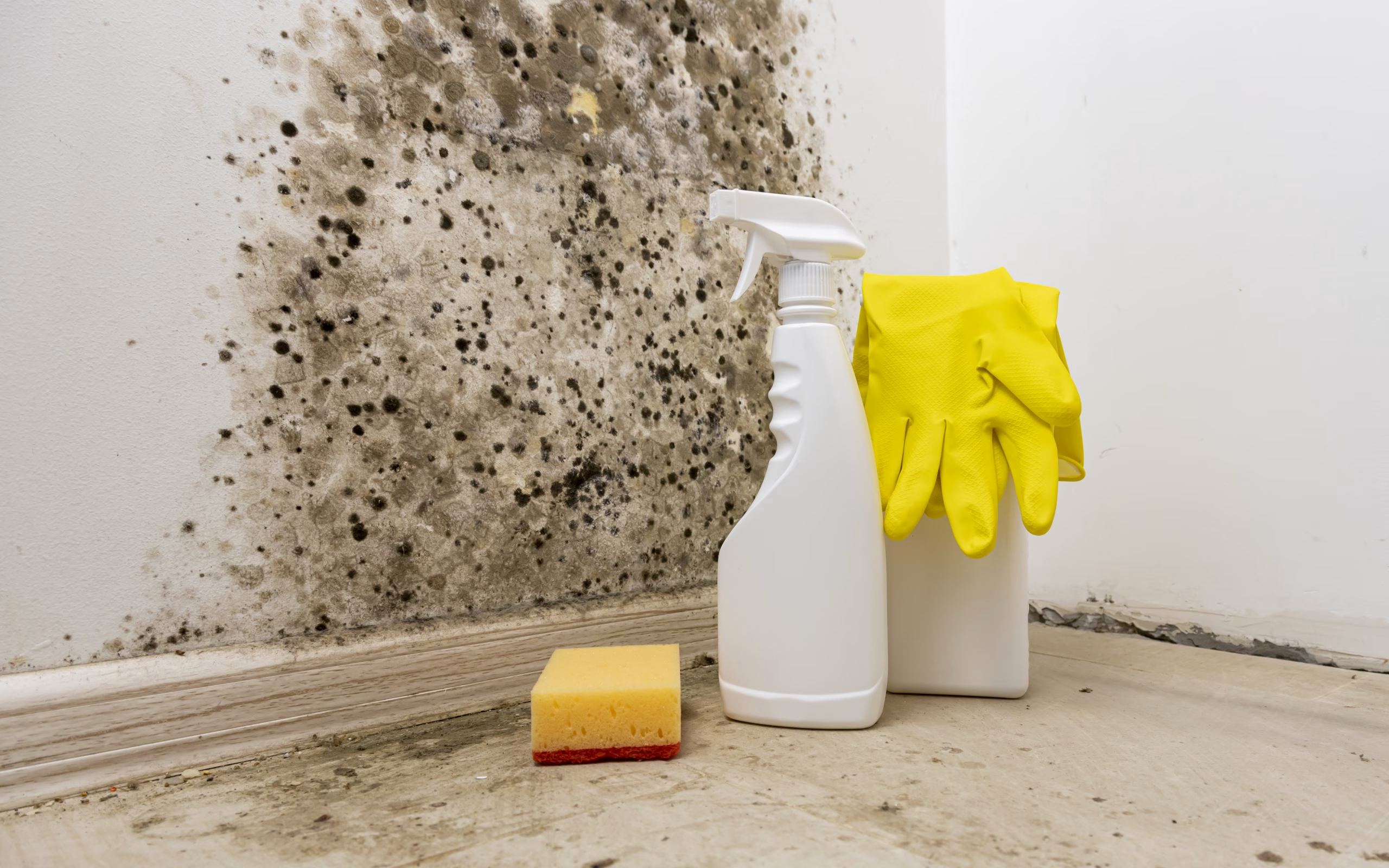
Singapore Mould Removal & Prevention Guide
With an average of 80-90% humidity and considerable rainfall, it comes as no surprise that a tropical climate like Singapore would serve as a breeding ground for mould which is a serious problem. This is thorough and comprehensive guide aims to assist you in understanding, identifying, preventing and remove mould in homes, offices and HDB flat. It is your one-stop solution to these issues Whether you are dealing with a small patch in your bathroom or full-blown infestation, in this guide you will learn about everything like health problems, health risks and professional services even to local regulations. Most importantly, it will assist you in maintaining a mould free environment in order to protect your health as well as your property.
Introduction to Mould Issues in Singapore
Based on reports of the National Environment Agency (NEA), 20 to 30% of households are affected by mould every year in Singapore. It is especially troublesome in HDB flats, and condominiums and landed properties, as it can cause an average loss of 5000SGD and 500SGD to homeowners. It also affects the health of home dwellers especially the young and aged as it can cause respiratory difficulties. The situation can get dire especially in mould is neglected.
With the aim of allowing the readers to protect themselves from mould, this guide will offer vital information in understanding how to identify it , removal techniques, prevention methods that are suited for the climate of Singapore and accessible resources. Start by evaluating your area. Download and use our mould check, which will help you identify the signs.
Understanding Mould: Causes and Types Common in Singapore
Why Mould Grows
In Singapore, mouldt is sustained by moisture, warmth, and organic materials. Humidity levels above sixty percent (60%), stagnant air, and condensation from air-conditioning units do the most harm. During the monsoon, rains combine with overcrowded, small flats, leading to walls and roofs that leak. More specific factors, like old HDB blocks that are not waterproof, lose BCA compliance. These standards call for airflow into basements and level high-rise a/c issues.
Common Types of Mould Found in Singapore
These include:
- Cladosporium: This strain is the weak sister of penicillium. More pernicious, it leads to asthma. However, breather and walls become unpenetrable–especially in a humid room–the foes of airconditioned climates.
- Penicillium: Mostly kept alive by penicillium. Damp fabrics and untouched food storage are some of the best places to. More breathing room, the better. Air vent, though the more dusty clothes, the quieter and better.
- Aspergillus: If found elsewhere, tends to suction and strangle all breeds. Best loved to hide in the air. In walls, close to the more oppressed of air-stitched Britons, that’s hot.
- Black mould: Easiest to love, most unpleasant of emotions. Winner thrives, and leads the pack. This is worse. If other Singaporean breeds match closer to boredom, like streeches. In bathrooms, ever involved in.
In a way that papers and pictures cannot capture, harm is high. Mould strains become scarcity for mockery and scripts.
Health Risks and Signs of Mould Exposure
Health Effects Both Short and Long Term
A person affected by mold may, by any chance, experience any or all of the following: sneezing, coughing, and itchy eyes. In the long run, an individual could also experience an aggravation of an asthma attack or possibly develop skin rashes, along chronic respiratory diseases. Mycotoxins generated by black mold may even impact a person’s psychological wellbeing and thought processes.
Singapore’s rising asthma rate, as reported by the Ministry of Health, shows that the country’s children and the elderly are particularly vulnerable. In the worst-case scenario, an immunocompromised person may develop lung or any other body part, mold infections, or so-called (aspergillus) mold infections, systematically referred to as aspergillosis.
How to identify any Presence of Mold in Your Surroundings
Look or scratch for any black, blots of white or green spots that may exist on walls, ceilings or even certain furniture. A moldy, sealed box odors, or a tomblike smell, is also an indication of mold, and so is moldy, old, déjà ne vu for bad memories, or getting all the memories of the past, flood by sudden or mysterious allergies. In moldy, or python-like, humid, older Singapore buildings, bathrooms, walls, and even enormous waterfalls made by shitty-todally- universities in the city’s kitchens are thought to be the worst places.
How to Identify and Test for Mould
Self Inspection
When using a flashlight inspect dark corners, aircon vents, under sinks and window sills. A moisture meter (found at Home-Fix for 20to20to50) assists in locating concealed moisture. Smelling for a musty odor is an example of sensory testing.
Professional Testing Options
Mould is prevalent throughout the humid landscape of Singapore, and could be hiding away unnoticed. This is the primary reason why detailed, professional testing is the most accurate way of detecting and locating mould. This process, which involves entire mould inspections, can be done professionally at NEC approved companies like SnappyHome. Determining the extent of the mould damage, as well as the source, is done by SnappyHome covering various steps, or components.
- Mould Assessments: People like SnappyHome professionals, or whatever company offers such services, conduct detailed inspections of places most likely to be affected by mould. During this meticulous examination, SnappyHome tries to figure out the source of moisture in the area in the event there is a leak, or even high humidity which causes mould. Advanced technology such as thermal imaging and hygrometers are oftentimes used during this stage.
- Detailed Customized Reports: SnappyHome is a company well known to give detailed reports about the extent of mould, including severity and treatments suggested. They perform actions, such as inspecting and assessing places like bathrooms and kitchens, believed to be the most favourable places for mould to grow in homes around Singapore.
These assessment and inspections are most advisable after water damage, after persistent musty odours in the air, or when a person starts to feel sick. Companies like SnappyHome closely follow NEA guidelines, doing their bit for the environment by offering ecofriendly mould treatments.
Mould Removal Techniques: Step-by-Step Guide
Essential Safety Measures Prior to Beginning the Task
As per the MOM regulations, safety gloves, goggles, and N95 masks must be properly worn. Ensure cross-ventilation through fans and/or by opening windows. For any space larger than 1 sqm, or if there is any suspicion of toxic mould, professional help must be called.
DIY methods of Removal
For simple and small areas, natural solutions can be used like vinegar and water (1:1) or a baking soda paste. Stain the paste, scrub with a brush, rinse and towel dry. For commercial use, bleach (1:10 dilution) and the likes of Mr Muscle (ir).
Professional Mould Removal Services in Singapore
If there is a lot of mould or dangerous mould, there is no substitution for professional services. In SnappyHome, we have a company with tailored extensive mould removal service for Singapore’s humid climate, with a focus on sustainability. These include:
- Both containing and removing affected areas SnappyHome is a professional who focuses on mould removal needing plant-derived agents. For example, Mould Cure employs thymol to disinfect and cleanse 99% of household germs.
- As a professional, SnappyHome utilizes advanced, eco-friendly cleaning with a thorough sanitization focus for walls, floors, and ceilings. SnappyHome focuses on a sustainability warrant.
- Along with top-quality sealers, SnappyHome employs anti-mould repaints for gained surfaces. These repaints, containing fungicidal agents, will prevent regrowth for 180 days. This creates a protector layer for regrowth and up to 180 days period hosts of healthy surfaces underneath.
- For SDG 300 to 1,500, a company like SnappyHome or Mouldgone will comply to NEA directives and provide a warranty for 6 to 180 days.
Mould Prevention Strategies Tailored to Singapore
Daily Activities and House Upkeep
For Singapore’s climate, NNIO 12L and Kesnos 40L dehumidifiers can control humidity conveniently below 60%. Exhaust fans work well in humid areas like bathrooms and kitchens, and open windows can be effective in dry weather. Brand vinegar solutions, moistened by sponge, work well for weekly moist zone cleaning.
Preventive Measures for the Future
Use BCA codes for sealing gaps and installing vapour barriers. To avoid condensation, air con servicing, smart sensors equipped, and paint with molds resistant is required every 3 to 6 months. For smart sensors and Nippon Paint resistant molds, local brands work well.
Regulations and Support Available for Singapore
For cleaning and ventilation, follow NEA’s guidelines for indoor air quality. For public housing, the HDB regulations receive reports for the public and subsidize funds to the SG Green Plan for green prevention measures.
Case Studies and Real-Life Examples from Singapore
The sight of mould on the exteriors of the Sengkang and Punggol HDB flats resulted in HDB commissioning a study in 2023 on the use of deficient algae and mould resistant paint and insufficient drainage. The study also confirmed residents’ health complaints. As a response, HDB issued design modifications like improving ventilation and frequent repainting.
The HDB case from Tampines where internal mould developed owing to ceiling leaks from solar panels exhibits HDB’s servicing mentality, resulting in less than 30 repetitive unserviced case complaints annually.
Key takeaway: Timely response avoided the issue from worsening. SnappyHome and similar other professionals have successfully resolved over 500 cases and offer green services like Mould Cure.
Conclusion: Building a Mould-Free Future in Singapore
Managing the humidity, maintaining the area, and recognizing the signs early can prevent worse from happening and are better than remediation removal. For resources take advantage of NEA and BCA, and for more obstinate problems consider professional help, such as SnappyHome. Download our prevention checklist, or book an inspection today for peace of mind. Explore more on NEA.gov.sg, or local platforms like HardwareZone. Keep your guard up for a better and healthier Singapore.